
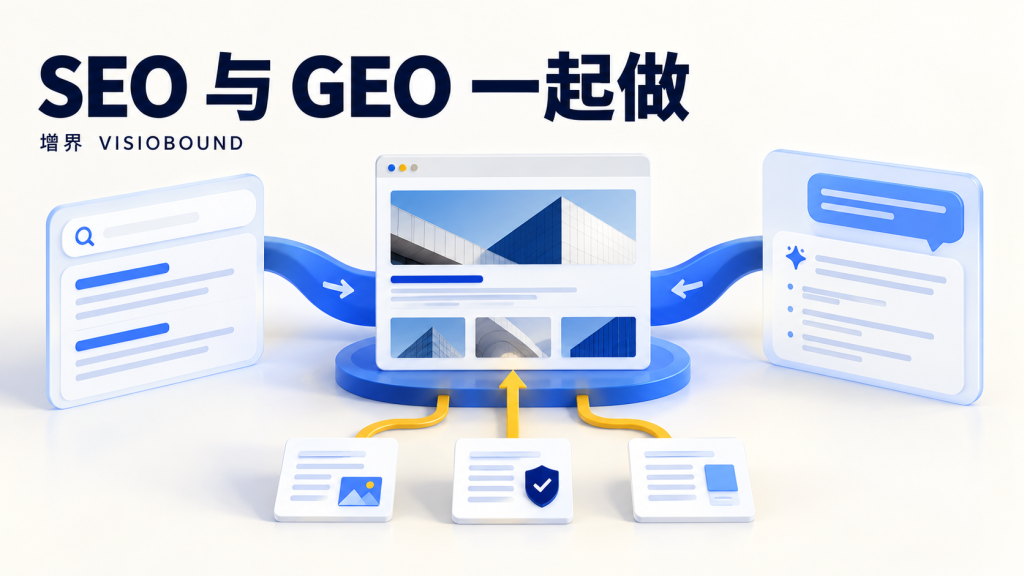
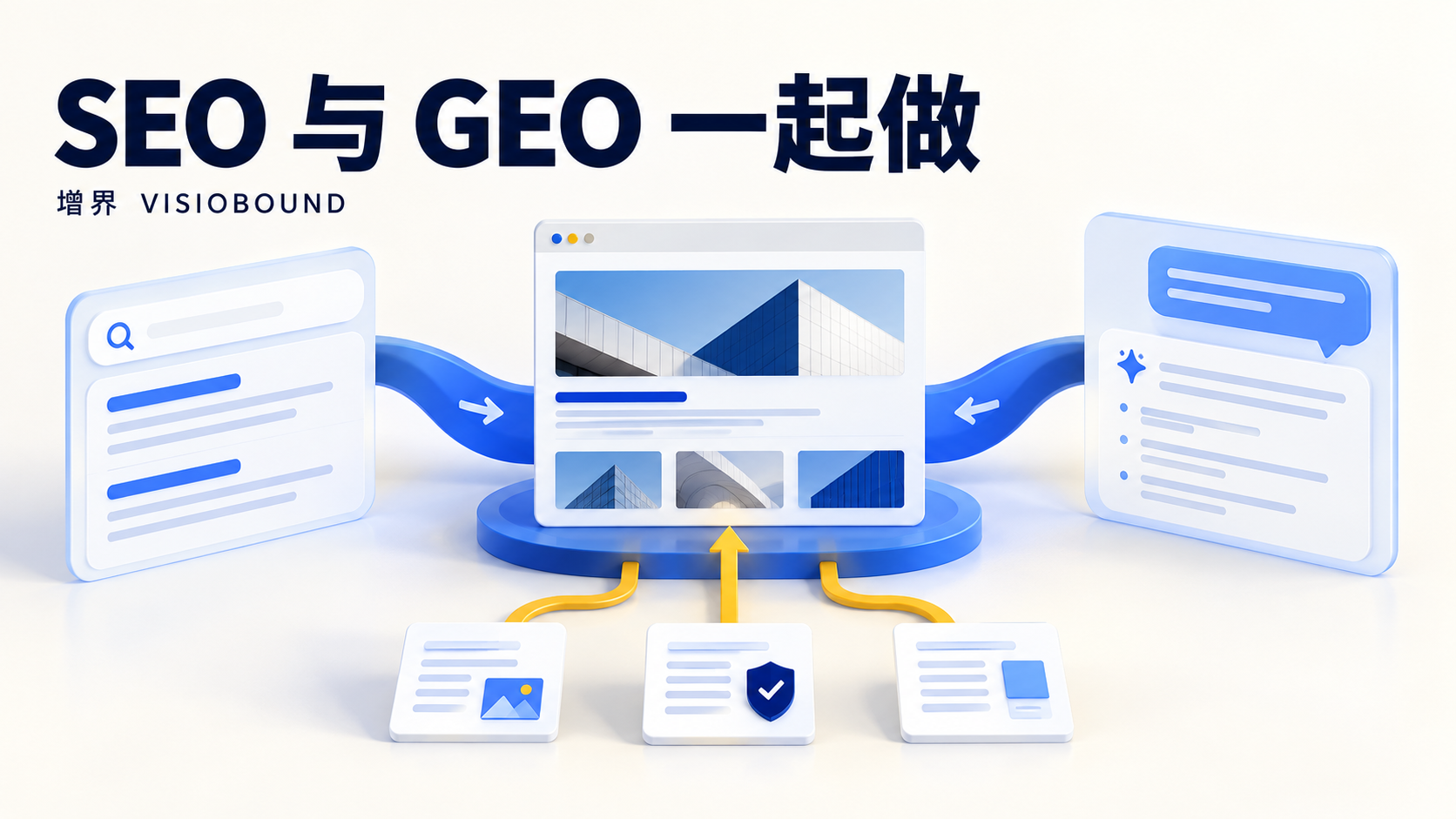
SEO and GEO do not require two disconnected content libraries. Build clear service pages, answer genuine buyer questions and maintain consistent, checkable facts. Treat AI visibility as an observation to evaluate, not a promised result.
1. Separate discovery, mentions and outcomes
SEO supports search discovery and visits. GEO commonly refers to visibility in generated answers, including brand mentions and source citations. A mention without a click is not the same as an inquiry, and an inquiry is not automatically qualified.
Google states that existing SEO fundamentals apply to its AI search features and that special AI files or dedicated schema are unnecessary. Do not assume that every other platform follows identical rules; check each platform separately.
2. Build one shared demand map
Group questions into procurement, selection, usage and comparison tasks. A service page can address “B2B SEO services”; a decision article can explain timelines; a comparison can discuss SEO versus PPC. Review existing coverage before creating near-duplicates for slightly different wording.
Add recurring sales questions about suitability, cost components, scope and delivery. Use real buyer conversations to guide the plan rather than turning an exported keyword list directly into an editorial calendar.
3. Create reusable, verifiable information
Answer the central question directly, then explain conditions, steps, examples and limitations. Identify sources and dates for research, platform rules or numerical claims. Keep company identity, service scope and contact details consistent across the site.
When project material is available, explain the context, work and evidence that can legitimately be disclosed. When results cannot be verified or shared, demonstrate the process instead of presenting logos, diagrams or demo data as proof of performance.
4. Make important content discoverable
Keep essential explanations in readable text, supported by useful images rather than hidden inside them. Use descriptive titles, logical headings and relevant internal links. Check indexability and canonical URLs for important pages. Structured data must describe visible content accurately.
Use image alternatives to explain purpose, not to insert keyword lists. FAQs should answer genuine questions; they are not a reason to fabricate content or promise enhanced search presentation.
5. Review AI visibility with an audit trail
Choose a relevant question set and record platform, date, language, market or session conditions, mentions, cited URLs and factual accuracy. Keep repeated observations comparable while noting variations.
Report these observations separately from search impressions, organic visits, service-page behavior and qualified leads. Correct inaccurate company information and important content gaps before expanding the question set. A single generated-answer screenshot is not a stable ranking.
Frequently asked questions
Can GEO replace SEO?
Not as a general rule. Maintain discoverability and reliable content while measuring each channel separately.
Does higher keyword density guarantee citations?
No. Prioritize useful answers and evidence rather than a repetition target.
Continue reading
Primary reference:Google Search Central — AI features and your website
Building a sustainable acquisition system?
Visiobound helps B2B teams connect SEO, GEO, paid media, and website conversion into a followable inquiry path.
Contact sales